 VetVault
Understand your pet’s blood test before the vet calls back
Lab reports are written for veterinarians: dozens of abbreviations, units and ranges. VetVault turns a photo or PDF of the report into a clear list of what is normal, what is high or low, and what it may mean, in plain language.

Your first analysis is free. Works for cats and dogs.
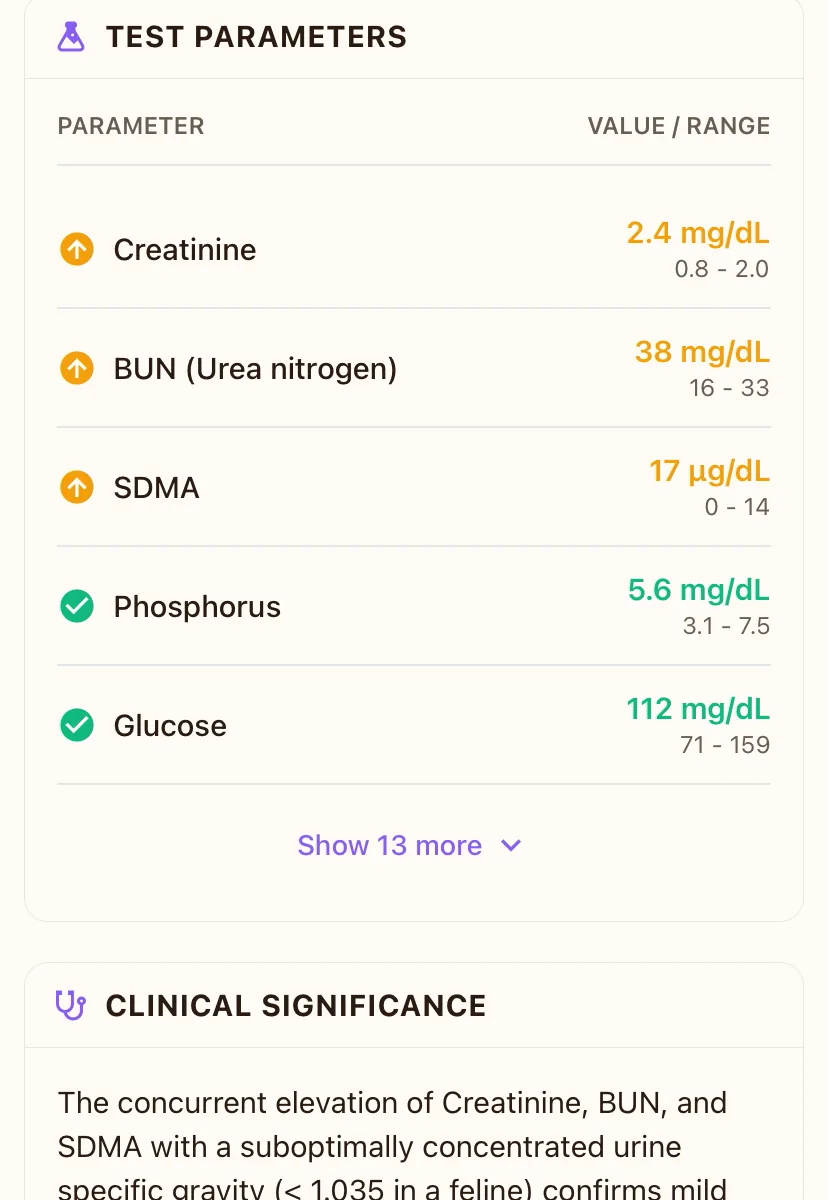
Every value, checked against your lab’s own range
A table of every result
Each parameter with its value, unit and the reference range printed on your report, marked normal, high, low or critical. Nothing is hidden behind a single score.
A plain-language summary
What the pattern of results suggests, written for pet owners, with an overall level (routine, moderate or urgent) to help you judge how soon to talk to your vet.
Abnormal findings and follow-up
Each out-of-range value explained, plus the follow-up tests and questions a vet is likely to discuss, so you are prepared for the conversation.
Comparison with past results
When there are earlier tests, each value is compared with the previous one and marked improving, worsening or stable: useful for kidney, thyroid and diabetes monitoring.
A real analysis of a sample senior cat panel
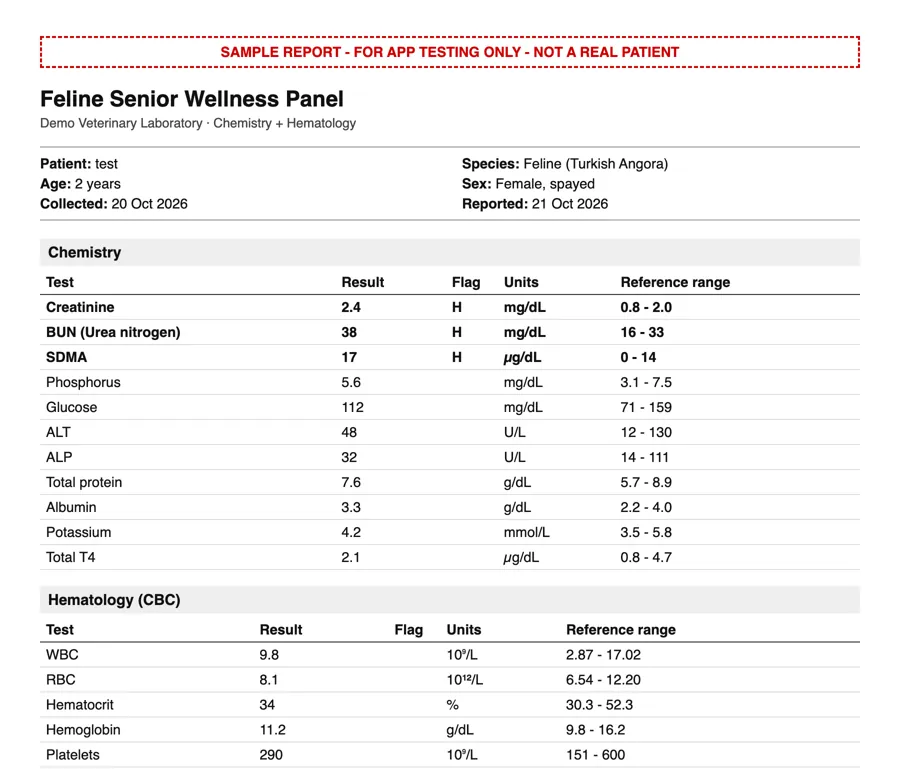
We made a sample report with a typical early-kidney pattern (creatinine, BUN and SDMA slightly high, dilute urine) and analyzed it in the app. These are unedited screenshots of the result.
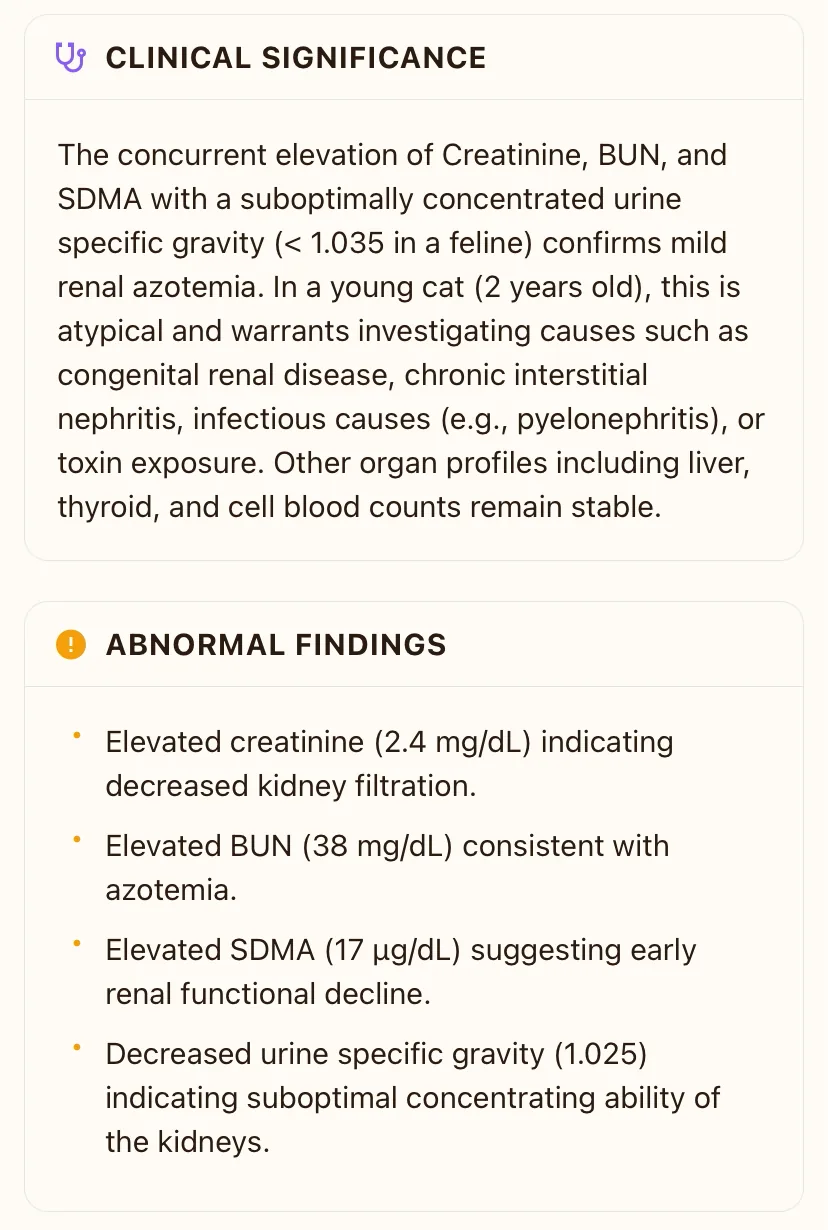
The analysis even noted that this pattern would be unusual in a young cat, because the sample pet in the app was 2 years old. Want to understand these values yourself? Read cat kidney values explained.
What VetVault can read
- Complete blood count (CBC): red cells, hematocrit, hemoglobin, white cells and their types, platelets
- Chemistry panel: kidney (creatinine, BUN/urea, SDMA, phosphorus), liver (ALT, ALP, GGT, bilirubin), proteins, glucose, cholesterol, electrolytes
- Endocrine: total T4, fructosamine
- Urinalysis: specific gravity, protein, urine protein:creatinine ratio
- Vet visit documents: visit notes, discharge summaries, prescriptions and clinic invoices turned into diagnosis, treatment and medication records
Photos and PDFs. For best results, photograph the whole page in good light, flat and in focus.
Not a diagnosis. A single value slightly outside the range is often not a problem, and a normal-looking panel does not rule out illness. VetVault explains what the report says; your veterinarian interprets it with the examination and history. Call your vet straight away if your pet stops eating, vomits repeatedly, cannot urinate, has trouble breathing or collapses.
Frequently asked questions
What kinds of lab reports can VetVault read?
Blood tests (complete blood count and chemistry panels, including kidney values such as creatinine, BUN and SDMA, liver enzymes, glucose, electrolytes and thyroid T4) and urinalysis, from a photo of the printout or a PDF from your clinic or the laboratory.
How accurate is the AI analysis?
VetVault reads the values and reference ranges printed on your report and compares them directly, so the high and low flags follow your own laboratory's ranges. Photos should be sharp and show the whole page. Always check important values against the original report and discuss them with your vet; the explanation is not a diagnosis.
Does VetVault compare results over time?
Yes. When your pet has earlier analyzed results, VetVault compares the new values with them and marks each one as improving, worsening or stable.
How long does an analysis take?
Usually under a minute. In our own test, a full senior panel with 18 values took about 20 seconds.
Is lab analysis free?
Every account gets one free AI lab analysis. Premium ($6.99 a month, $49.99 a year or $149 once, US prices) includes unlimited analysis.
Where is my lab report sent?
The document goes from the app to our server and to Google's Gemini AI to create the explanation, then the result is stored in your pet's record. We do not sell your data. You can delete any result, or your whole account, in the app.
My report is in Turkish or Romanian. Does it work?
Yes. VetVault reads reports in other languages and writes the explanation in the language you use the app in: English, Turkish or Romanian.